
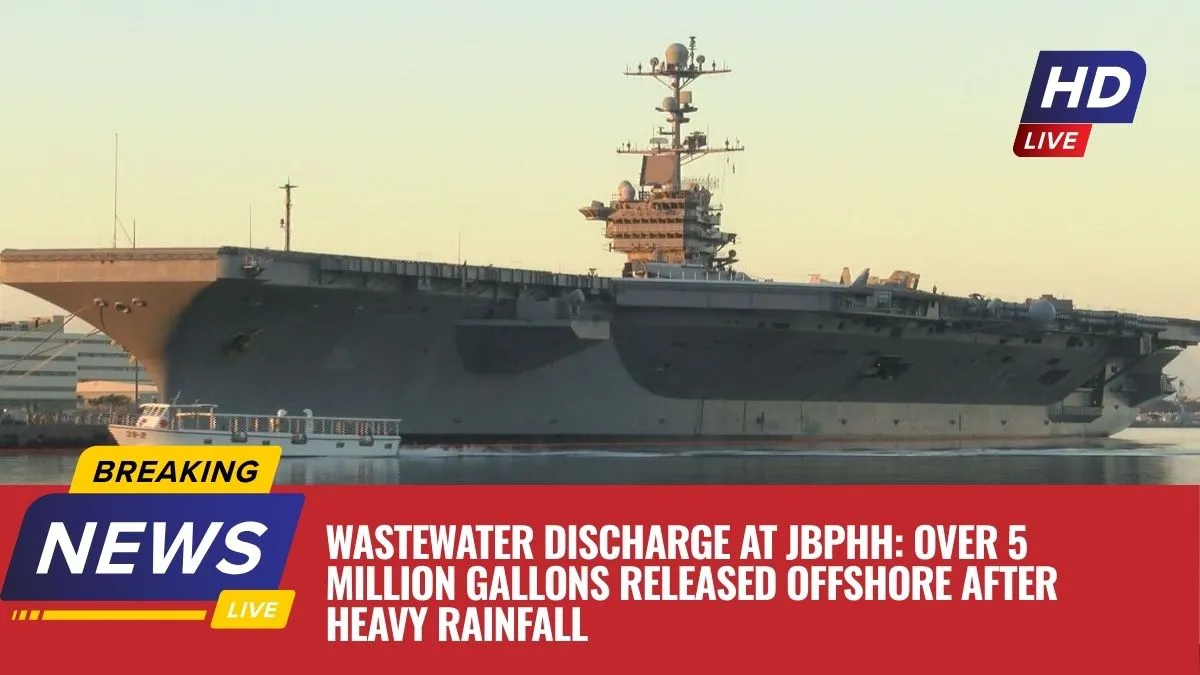
A wastewater discharge incident was recently reported at Joint Base Pearl Harbor-Hickam (JBPHH) following intense rainfall. The wastewater discharge event has drawn attention due to the volume of partially treated water released into nearby ocean waters. Authorities have shared detailed information to clarify the situation, environmental safety, and treatment processes involved.
What Happened at JBPHH?
Between 4 p.m. on Friday, March 13, and 10:15 a.m. on Monday, March 16, JBPHH’s Wastewater Treatment Plant experienced a system bypass. During this time, the facility’s sand filtration stage was skipped, resulting in a wastewater discharge of more than five million gallons of partially treated water.

This wastewater discharge was directed through the plant’s offshore outfall into Mamala Bay, as part of the facility’s emergency handling process during heavy rainfall.
Where Was the Wastewater Released?
The discharged water was released via a specially designed offshore outfall system:
- Extends approximately 1.5 miles offshore
- Ends at a diffuser located 150 feet below the ocean surface
- Allows wastewater to mix and dilute with surrounding ocean water
This design helps minimize immediate environmental impact during any wastewater discharge event.
Treatment Process and Safety Measures

Even though the sand filtration stage was bypassed, the wastewater still underwent UV disinfection, which is a critical safety step.
Standard Treatment Steps at the Plant
- Clarifiers
- Activated sludge treatment
- Sand filtration
- UV disinfection
During this wastewater discharge, only the sand filtration step was skipped, while UV treatment was still applied to disinfect the water before release.
Environmental Impact and Monitoring
Officials stated that past incidents involving UV-treated wastewater discharge have consistently shown:
- Bacteria levels remained within permitted limits
- No significant environmental harm detected
The wastewater discharge in this case is expected to follow similar patterns, though monitoring continues to ensure safety.
Official Response and Compliance
The Navy confirmed that the State Department of Health was informed, as required under the wastewater treatment plant’s operating permit.
This step ensures transparency and allows environmental authorities to review and monitor the wastewater discharge situation.
Key Details at a Glance
| Detail | Information |
|---|---|
| Location | Joint Base Pearl Harbor-Hickam (JBPHH) |
| Incident Type | Wastewater discharge |
| Duration | March 13 (4 p.m.) to March 16 (10:15 a.m.) |
| Volume Released | Over 5 million gallons |
| Treatment Applied | UV disinfection (sand filtration skipped) |
| Discharge Point | Mamala Bay offshore outfall |
| Depth of Release | ~150 feet below ocean surface |
| Authority Notified | State Department of Health |
The wastewater discharge at JBPHH highlights how heavy rainfall can strain treatment systems, leading to temporary process changes. Despite the bypass of sand filtration, the continued use of UV disinfection helped maintain safety standards.
Authorities have emphasized that similar past events did not result in environmental damage, and ongoing monitoring ensures that ocean ecosystems remain protected. Transparent reporting and compliance with health regulations further support confidence in how such incidents are managed.