
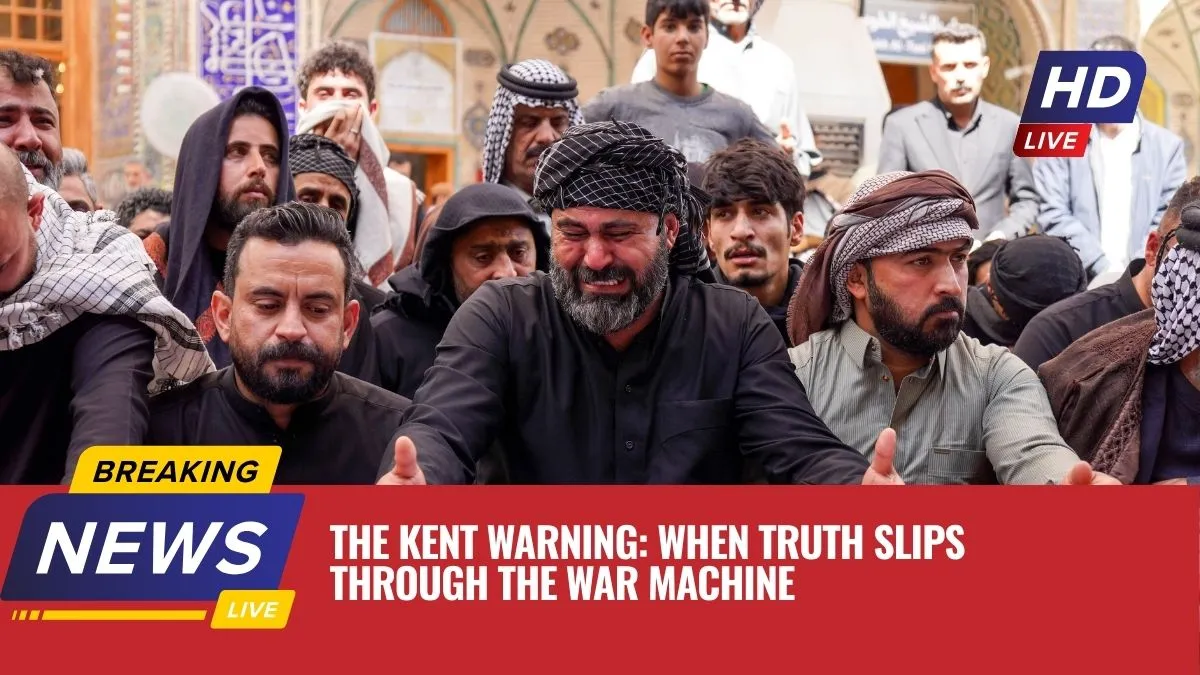
The Kent Warning has sparked a serious debate about modern warfare, policy decisions, and the voices that often go unheard. When a senior counterterrorism official openly questions the direction of a war, it forces people to stop and think. This is exactly what happened when Joe Kent stepped down and raised concerns that many insiders may share but rarely express.
The Kent Warning is not just about one resignation—it highlights deeper issues within the system, where truth, dissent, and accountability often struggle to break through.
Who Is Joe Kent and Why His Resignation Matters

Joe Kent was not just another official. He served in multiple combat missions and personally experienced the cost of war, including losing his wife in service. This background gives weight to the Kent Warning, making it more than just an opinion.
Key Points About Kent’s Stand
- He stated that Iran posed no immediate threat to the United States.
- He suggested that external pressures, particularly from allies like Israel and its lobbying networks, influenced war decisions.
- He refused to use typical diplomatic language and instead spoke directly.
This kind of honesty is rare in national security circles. The Kent Warning stands out because it comes from someone deeply connected to the system he is criticizing.
A System That Silences Dissent
Every war brings disagreement, but most people stay silent. The Kent Warning raises an important question:
How many officials feel the same but do not speak up?

Washington has access to detailed intelligence and expert analysis. However, the problem is not lack of information—it is the lack of action based on that information.
Common Justifications for War
| Reason Given | Historical Usage |
|---|---|
| Deterrence | Vietnam, Iraq, Afghanistan |
| Stability | Middle East conflicts |
| National Security | Global military operations |
These explanations often appear early in conflicts and continue long after problems become clear. The Kent Warning challenges these repeated narratives.
Historical Parallel: The Marshall Warning
The concerns raised in the Kent Warning are not new. A similar situation occurred in 1947.
George C. Marshall’s Opposition
- Opposed recognition of Israel under certain conditions
- Warned of long-term instability and conflict
- Was ignored by President Harry Truman

Truman went ahead with the decision, which later shaped U.S. foreign policy in the Middle East. The Kent Warning reflects a similar pattern—experienced insiders raising concerns that may be overlooked.
The Role of Alliances and Domestic Pressure
The Kent Warning also highlights how U.S. policy may be influenced by more than just strategy.
Key Influencing Factors
- Alliance commitments with countries like Israel
- Domestic political pressure
- Lobbying networks
- Institutional momentum within government systems
Scholars like Stephen Walt and John Mearsheimer have long argued that U.S. foreign policy is shaped by internal and external pressures. The Kent Warning adds credibility to these claims by bringing them from within the system itself.
Why Is the War Continuing?
One of the most direct questions raised by the Kent Warning is:
Why engage in war if there is no immediate threat?
Possible explanations include:
- Strategic alliances
- Political interests
- Long-standing policy patterns
However, the deeper issue may be a system that struggles to separate its own interests from those of its allies.
A Pattern of Escalation Without Clear Goals
The Kent Warning points to a recurring issue in U.S. military actions:
- Escalation without clear necessity
- Military action without defined objectives
- Long-term commitments without public debate
This pattern has been seen before in conflicts like Iraq and Afghanistan. The concern is that history may be repeating itself.
The Importance of Speaking Out
Kent’s decision to resign was not just symbolic. The Kent Warning emphasizes the need for:
- Transparency in decision-making
- Open discussion about war policies
- Accountability from leadership
However, resignation alone is not enough. Without broader awareness and action, such warnings risk being forgotten.
The Kent Warning serves as a powerful reminder that questioning war is not a sign of weakness—it is a necessity. History shows that ignoring internal dissent can lead to long-term consequences.
Joe Kent’s resignation has brought attention to critical issues: unclear objectives, external influence, and the lack of meaningful debate. The real challenge now is whether policymakers and the public will take the Kent Warning seriously or allow it to fade like similar warnings in the past.