
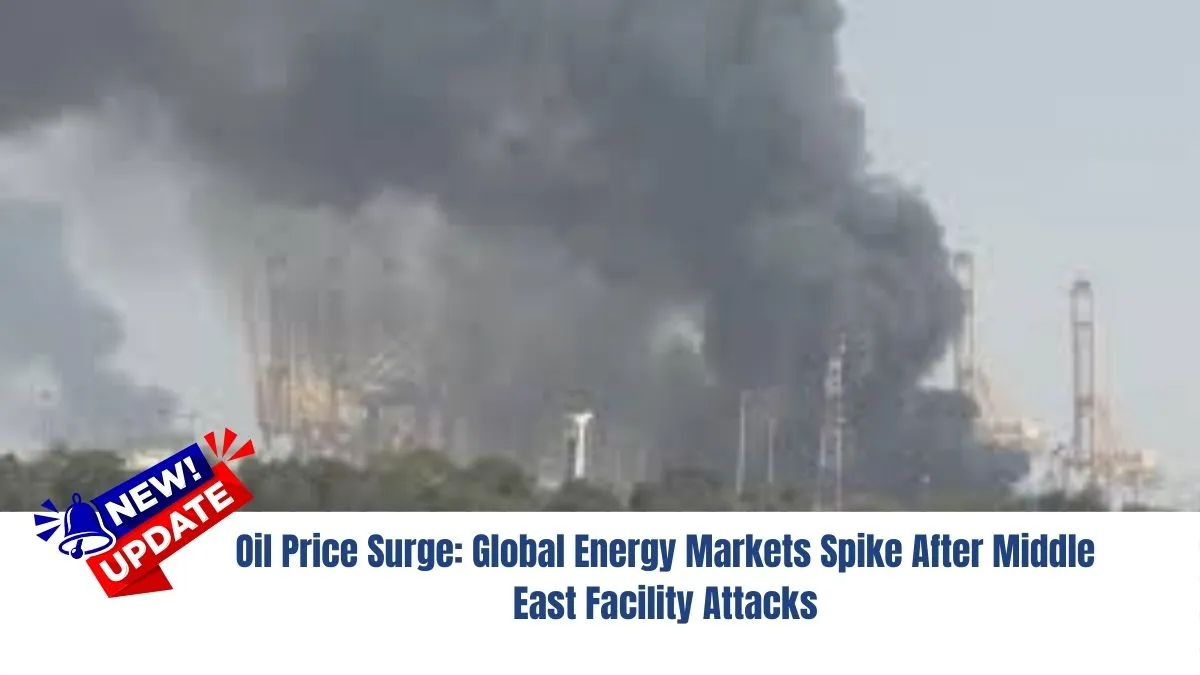
The ongoing oil price surge has intensified as geopolitical tensions in the Middle East escalate sharply. Energy markets reacted strongly after Iran launched strikes on key production facilities, disrupting supply chains and raising fears of a broader regional conflict. This sudden oil price surge is already impacting global markets, with crude oil and natural gas prices climbing rapidly.
Oil Price Surge Driven by Escalating Attacks
On Thursday, global energy markets saw a sharp oil price surge following Iran’s increased attacks on critical energy infrastructure across the Middle East. These developments have heightened concerns about supply disruptions in one of the world’s most important energy-producing regions.
- Brent crude, the global benchmark, jumped nearly 8%, reaching around $115 per barrel
- A day earlier, Brent had already closed at $107.38, its highest level since mid-2022
- WTI crude, the US benchmark, rose about 1%, hitting approximately $96 per barrel

This ongoing oil price surge reflects growing fears of prolonged instability in energy supply chains.
Natural Gas Prices Skyrocket in Europe
The oil price surge has been accompanied by a dramatic rise in natural gas prices, especially in Europe.
- European benchmark gas prices surged by 24% in a single day
- Prices have now more than doubled since February 28, when the conflict began
This sharp increase highlights how the oil price surge is not limited to crude oil but is affecting the broader energy market.
Qatar’s Ras Laffan LNG Hub Hit by Missiles

A major trigger behind the current oil price surge was the attack on Qatar’s critical LNG infrastructure.
- QatarEnergy confirmed that the Ras Laffan LNG facility suffered extensive damage
- The site was struck by Iranian missiles twice within 12 hours
- Ras Laffan is considered the largest LNG facility in the world
The damage to this facility is a key factor fueling the oil price surge, as it threatens global LNG supply, especially to Asia.
Strikes Expand Across Key Energy Producers
The oil price surge is also being driven by a wider escalation of attacks across the region.
- Iran’s own energy facilities were targeted earlier, including South Pars, part of the world’s largest gas field
- The field is shared with Qatar, increasing global risk exposure
- Iran has warned of further strikes targeting:
- Saudi Arabia
- Qatar
- United Arab Emirates

Additional incidents include:
- Attacks on two oil refineries in Riyadh
- Drone strikes causing fires at two Kuwaiti refineries, later contained
These developments are amplifying the oil price surge by threatening multiple supply sources simultaneously.
Experts Warn of Further Price Increases
Energy analysts believe the oil price surge may not be over yet.
Aditya Saraswat, a senior executive at Rystad Energy, noted that:
- Further attacks could push oil prices up by another $10 per barrel
- Supply disruptions across major Middle Eastern producers could worsen
- Asia may face the biggest impact due to reliance on Qatari LNG
This outlook suggests the current oil price surge could intensify if tensions continue.
Impact of Oil Price Surge on Global Markets
The ongoing oil price surge is expected to have widespread consequences:
| Sector | Impact |
|---|---|
| Energy | Higher fuel and electricity costs |
| Transport | Rising logistics and travel expenses |
| Manufacturing | Increased production costs |
| Consumers | Inflation and higher daily expenses |
The ripple effects of the oil price surge could influence economies worldwide.
The current oil price surge highlights how fragile global energy markets are in times of geopolitical conflict. With major infrastructure damaged and threats expanding across key oil-producing nations, the risk of prolonged supply disruptions remains high.
If tensions continue to escalate, the oil price surge could deepen further, impacting economies, industries, and households globally. Monitoring developments in the Middle East will be crucial in understanding how long this upward trend in energy prices will last.