

The £250 Cost of Living Payment for March 2026 has been officially confirmed by the UK government, bringing timely financial support to households facing rising expenses. This £250 Cost of Living Payment is designed to help vulnerable groups manage increasing energy bills and everyday costs before the new financial year begins in April.
Unlike previous universal support schemes, this payment is targeted, meaning only eligible individuals and households will receive it. Understanding the eligibility rules, payment schedule, and how it works is essential to make the most of this financial boost.
What Is the £250 Cost of Living Payment?
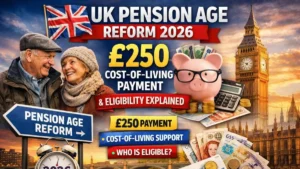
The £250 Cost of Living Payment is a one-off financial support measure introduced to assist low-income households, pensioners, and individuals with disabilities. It comes after a difficult winter period when energy costs remained high and food prices continued to rise.
The government aims to ensure that financial help reaches those who need it the most, rather than distributing blanket payments to everyone.
Payment Dates and Rollout Timeline
When Will the £250 Payment Be Made?
The Department for Work and Pensions (DWP) has confirmed the rollout schedule:
| Detail | Information |
|---|---|
| Payment Start Date | March 9, 2026 |
| Payment End Date | March 27, 2026 |
| Payment Method | Direct bank deposit |
| Application Required | No |
Payments will be automatically credited to the same bank account where you receive your benefits or State Pension.
How Will It Appear in Your Bank Statement?
Look for a reference similar to:
“DWP COL” + National Insurance Number
Eligibility Criteria for £250 Cost of Living Payment
To qualify for the £250 Cost of Living Payment, you must have received at least one eligible benefit during the qualifying period (January 1 to February 15, 2026).
Qualifying Benefits Include:
- Universal Credit
- Income-based Jobseeker’s Allowance (JSA)
- Income-related Employment and Support Allowance (ESA)
- Income Support
- Pension Credit
- Working Tax Credit
- Child Tax Credit
Support for Disabled Individuals
The £250 Cost of Living Payment also includes individuals receiving disability-related benefits such as:
- Personal Independence Payment (PIP)
- Disability Living Allowance (DLA)
- Attendance Allowance
These payments recognize the higher living costs faced by people with disabilities, including heating and medical equipment expenses.
Important Rule
If you receive multiple benefits, you will still receive only one £250 payment per household, not multiple payments.
Household Support Fund (Extra Help)
Alongside the £250 Cost of Living Payment, the government has increased funding for the Household Support Fund (HSF).
What This Means
Local councils can offer additional support such as:
- Emergency cash grants
- Energy bill assistance
- Grocery vouchers
This is especially useful for households that just miss eligibility criteria for the main payment.
Beware of Scams
With the rollout of the £250 Cost of Living Payment, scams are increasing.
Key Safety Tips
- The payment is automatic
- You will not receive texts or emails asking for details
- Never share bank or personal information
Report suspicious messages to 7726 or the National Cyber Security Centre.
Why March 2026 Timing Matters
March is often financially challenging due to:
- Delayed impact of winter energy bills
- Rising council tax and utility costs
- Increased household expenses before April
The £250 Cost of Living Payment helps bridge this gap and supports families during a critical time.
Impact on Universal Credit and Other Benefits
The government has clarified:
- The £250 Cost of Living Payment is tax-free
- It does not affect benefit calculations
- It will not reduce Universal Credit payments
- It is ignored for savings limits (temporarily)
This ensures recipients can fully benefit without losing other support.
Regional Differences Across the UK
The £250 Cost of Living Payment applies across:
- England
- Scotland
- Wales
- Northern Ireland
However, the payment reference or processing agency may vary slightly depending on the region.
What to Do If You Don’t Receive Payment
If you believe you are eligible but haven’t received your £250 Cost of Living Payment by March 31, 2026:
Steps to Take
- Check your bank statement for “DWP COL”
- Confirm your benefit eligibility
- Visit the GOV.UK missing payment page
- Ensure your bank details are correct
Payments sent to closed accounts may be delayed and reviewed.
Future of Cost of Living Payments
The government has indicated that the £250 Cost of Living Payment may be among the last one-time support payments. Future plans focus on:
- Increasing wages
- Long-term benefit reforms
- Economic stability measures
How to Use the £250 Payment Wisely
Financial experts recommend:
- Paying essential bills (rent, energy, council tax)
- Reducing high-interest debt
- Buying essential goods
- Improving home energy efficiency
Using the £250 Cost of Living Payment strategically can provide longer-term relief.
The £250 Cost of Living Payment for March 2026 offers crucial support during a financially difficult period. With a clear rollout schedule, automatic payments, and targeted eligibility, it ensures help reaches those who need it most.
While it may be one of the final one-off payments, it plays a vital role in easing short-term financial pressure. Households should stay alert to scams, monitor their bank accounts, and use this support wisely to strengthen their financial stability moving forward.
FAQs
1. Who will receive the £250 Cost of Living Payment?
Anyone receiving qualifying benefits between January 1 and February 15, 2026, may be eligible.
2. Do I need to apply for the £250 payment?
No, the payment is automatic and will be deposited directly into your bank account.
3. Will this payment affect my other benefits?
No, it is tax-free and does not impact Universal Credit or other benefit payments.