
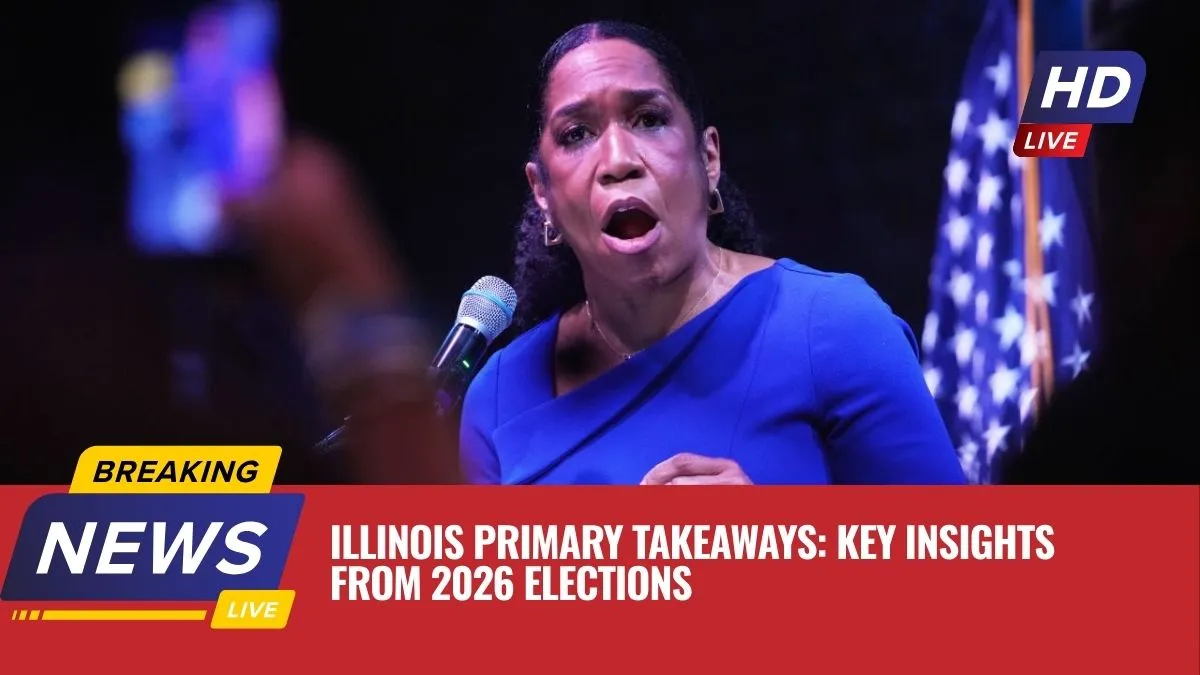
The Illinois Primary Takeaways reveal major shifts inside the Democratic Party, as Lt. Gov. Juliana Stratton secured the Senate nomination in a competitive and closely watched race. Her victory reflects growing progressive influence, internal party divisions, and the rising role of key political backers like Gov. JB Pritzker.
Stratton Secures Senate Nomination in Competitive Race
In one of the most talked-about Illinois Primary Takeaways, Lt. Gov. Juliana Stratton defeated two prominent Democrats—Rep. Raja Krishnamoorthi and Rep. Robin Kelly—to win the Senate nomination.

Stratton’s campaign stood out for its bold messaging, including a television advertisement featuring strong anti-Trump sentiments. Despite facing better-funded opponents, she gained strong support in Chicago and performed better than expected in suburban areas, which helped secure her victory.
This race was especially important because it fills the seat of retiring Democratic Sen. Dick Durbin, making it one of the most significant contests in the state.
Democratic Party Divisions Clearly Visible
Another major highlight from the Illinois Primary Takeaways is the deep divide within the Democratic Party.
The primaries showcased differences in:
- Ideology (progressive vs moderate)
- Generational leadership changes
- Foreign policy views, especially regarding Israel
- Influence of interest groups, including pro-Israel and pro-cryptocurrency organizations
Some candidates backed by these groups won key races, while others lost. In one Chicago-area House race, a progressive candidate promoting generational change failed to win, but the victor was also opposed by AIPAC, showing how complex party dynamics have become.
Multiple House Races and Senate Seat in Focus
The Illinois Primary Takeaways also include four open House seats along with the Senate race. All of these seats are expected to remain in Democratic control in the November elections.
However, the primary contests made it clear that while Democrats are likely to win, internal disagreements about the party’s future direction remain unresolved.
JB Pritzker Emerges as a Major Political Force
One of the biggest winners highlighted in the Illinois Primary Takeaways is Illinois Governor JB Pritzker.
- He ran unopposed in his own primary while seeking a third term.
- He invested millions of dollars to support Stratton’s campaign.
- His backing played a major role in her victory.
Pritzker, who is widely seen as a potential 2028 presidential candidate, delivered a strong speech criticizing former President Donald Trump and Republican leadership.
He described Trump as “the carnival barker in chief” and accused Republicans of promoting corruption, bigotry, and self-interest. His comments underline his positioning as a strong national Democratic voice.
Generational Shift in Senate Leadership
A key point from the Illinois Primary Takeaways is the possible generational shift in Senate leadership.
If Stratton wins the general election—as expected in strongly Democratic Illinois—she will bring a more progressive approach compared to the outgoing Sen. Durbin, who is 81 years old.
Stratton, 60, has already signaled change by stating she would not support Senate Minority Leader Chuck Schumer in his current role. Instead, she is advocating for bold progressive policies such as:
- Medicare for All
- Abolishing ICE
- Raising the minimum wage
- Defending democratic rights
She emphasized her commitment to challenging Donald Trump directly and pushing for systemic reforms.
If elected, Stratton would also make history as the sixth Black woman to serve in the U.S. Senate, marking an important milestone.
The Illinois Primary Takeaways highlight a turning point in Democratic politics. While the party is expected to maintain control in upcoming elections, the primaries exposed deep ideological divisions and a growing push for progressive leadership.
Juliana Stratton’s victory, backed strongly by JB Pritzker, signals a shift toward bold policies and new leadership styles. However, internal debates over direction, strategy, and priorities remain unresolved, making Illinois a key example of the broader national political landscape.