
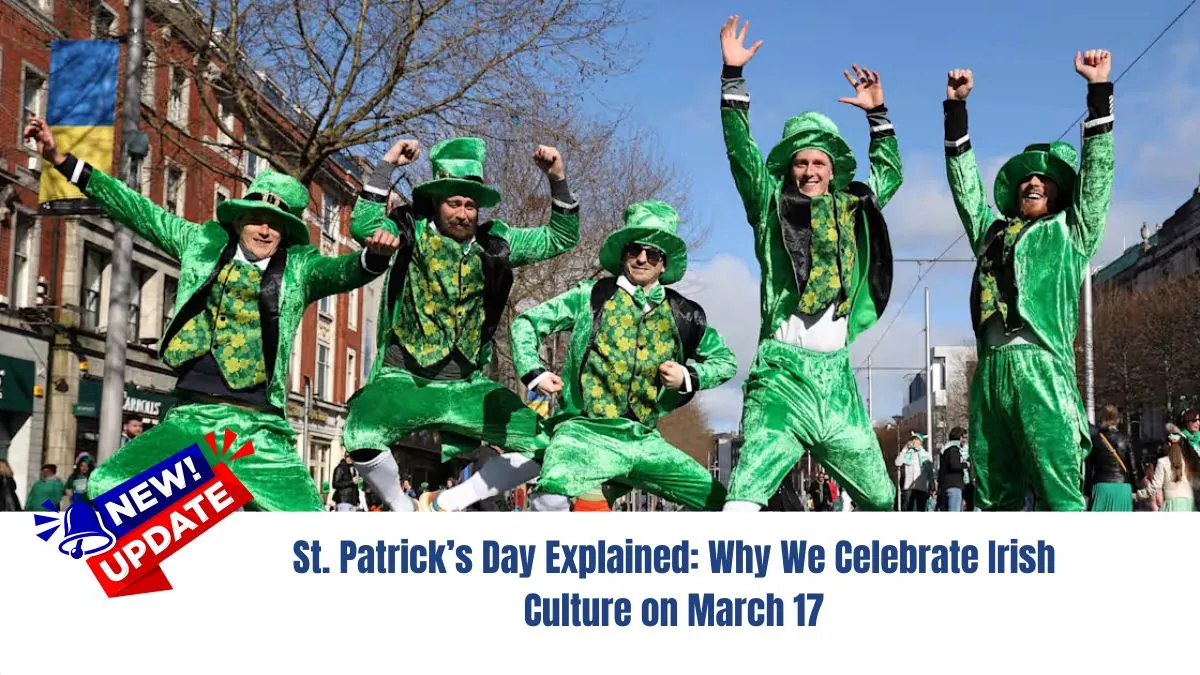
Every year on March 17, people around the world celebrate St. Patrick’s Day with parades, music, and traditional Irish food. But this famous holiday did not start as a party. The story of St. Patrick’s Day goes back hundreds of years and is deeply connected to religion, history, and Irish identity. Today, St. Patrick’s Day has become a global celebration of Irish culture, especially in countries like the United States.
Origins of St. Patrick’s Day Celebration
The roots of St. Patrick’s Day can be traced back to the ninth and 10th centuries. During this time, Irish Christians observed a special feast day in honor of St. Patrick during Lent.

Unlike regular Lenten restrictions, St. Patrick’s Day allowed people to take a break from fasting rules. They could eat meat, enjoy traditional meals like Irish bacon and cabbage, and celebrate with music and dancing.
How Parades Became Part of St. Patrick’s Day
Interestingly, St. Patrick’s Day parades did not begin in Ireland. Irish immigrants in the United States played a major role in shaping the modern celebrations.
- The first recorded parade took place in St. Augustine, Florida, in 1601.
- Boston hosted an early parade in 1737.
- New York City’s official parade started in 1766.
- Savannah, Georgia, began its parade tradition in 1824.
In Ireland, the first official parade was held later, in Waterford in 1903. Today, St. Patrick’s Day parades are organized worldwide, with large festivals in both Ireland and the United States.
Who Was St. Patrick?

St. Patrick, the central figure behind St. Patrick’s Day, is known as the patron saint of Ireland.
- He was born in Great Britain in the late 4th century.
- As a teenager, he was kidnapped by Irish raiders and enslaved for six years.
- During captivity, he became deeply religious.
- After escaping, he returned home but later came back to Ireland as a missionary.
Around 432 AD, he began spreading Christianity across Ireland. By the time of his death in 461 AD, most of Ireland had adopted Christianity. Even though he is called a saint, he was never officially canonized but gained recognition through popular belief.
Why March 17 Is Important
St. Patrick’s Day is celebrated on March 17 because it is believed to be the date of St. Patrick’s death, around 460 AD.

The day became an official religious feast in the mid-17th century when a Franciscan friar named Luke Wadding added it to the Catholic Church’s calendar. Since then, St. Patrick’s Day has been observed annually.
The Shamrock Symbol Explained
The shamrock, a three-leaf clover, is strongly linked to St. Patrick’s Day. According to tradition, St. Patrick used the shamrock to explain the concept of the Holy Trinity—Father, Son, and Holy Spirit—to the Irish people.
Today, the shamrock remains one of the most recognized symbols of St. Patrick’s Day.
Modern St. Patrick’s Day Celebrations
In modern times, St. Patrick’s Day is celebrated with:
- Parades and festivals
- Pub gatherings and green-themed drinks
- Traditional Irish music and dancing
- Unique traditions like dyeing the Chicago River green
These events highlight Irish heritage and bring communities together across the world.
Irish Heritage in the United States
Many Americans actively celebrate St. Patrick’s Day due to Irish ancestry:
| Statistic | Details |
|---|---|
| Irish ancestry in the U.S. | Over 32 million people |
| Irish-born residents | Around 117,000 |
| Highest Irish ancestry states | New Hampshire (21.3%), Massachusetts (18.9%) |
| Largest Irish-American population | Cook County, Illinois (about 434,000 people) |
This strong cultural connection is one reason why St. Patrick’s Day is so widely celebrated in the United States.
St. Patrick’s Day is much more than just a festive occasion. It began as a religious observance honoring St. Patrick’s role in spreading Christianity in Ireland. Over time, it evolved into a worldwide celebration of Irish culture, traditions, and heritage. From historical roots in ancient Ireland to modern parades in global cities, St. Patrick’s Day continues to unite people through history, culture, and joy.